AI
LLM
Benchmarking
Hardware
DeepSeek
Ask anything about this article
Hi! I've read this article.
What would you like to know?
@farhan
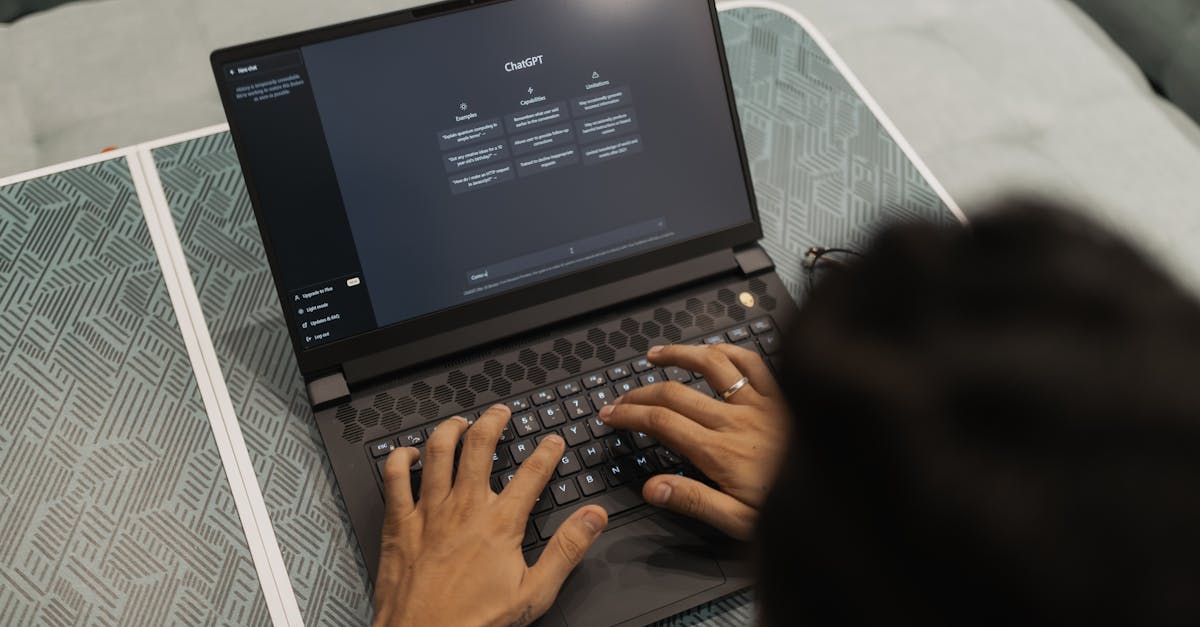
The AI developer community woke up this morning to two loud signals: a Show HN post called Llmspeed that promises to let you feel how fast a local LLM runs before you buy the hardware, and a fresh DeepSeek v4.1 flash release that claims record throughput on modest GPUs. At the same time, a recent Dev.to post warned that Google Cloud T4 instances often run below spec when decoding heavy models. Put together, these three pieces form a clear narrative: real‑world latency and cost are becoming the primary decision factors, not just model size or hype.
"If you cannot measure the latency on your own machine, you cannot trust the marketing numbers," says many HN commenters.
In this post I break down why developers are obsessing over these benchmarks, what Llmspeed actually does, how DeepSeek v4.1 performs in the wild, and what the cloud T4 reality check means for your next hardware purchase.
Historically, AI discussions revolved around model architecture, parameter count, and training data. The mantra was bigger is better. Over the past year, three trends have eroded that belief:
Developers now ask: What can I get for $100 a month, and how fast will it answer? The answer lives in benchmarking tools.
The Show HN post "Llmspeed – feel how fast a local LLM runs before you buy the hardware" introduced a lightweight CLI that:
Developers on HN immediately posted results: a 2023 MacBook Pro M2 Max achieved ~45 TPS on LLaMA‑7B, while an RTX 3060 hit 68 TPS on DeepSeek‑v4.1. The takeaway? GPU architecture matters more than raw TFLOPs.
DeepSeek released version 4.1 with a "Flash" optimization flag that leverages fused attention kernels and INT8 quantization. Independent tests posted on Reddit and Dev.to show:
| Hardware | Model | Precision | TPS |
|---|---|---|---|
| RTX 3060 | DeepSeek‑v4.1 | INT8 | 78 |
| RTX 4090 | DeepSeek‑v4.1 | FP16 | 210 |
| T4 (Google Cloud) | DeepSeek‑v4.1 | FP16 | 45 |
Key observations:
Developers are now debating whether to buy a $500 RTX 3060 laptop or rent a $0.30/hour T4 instance. The answer hinges on workload pattern: bursty interactive chat favors low‑latency local inference; batch processing can survive higher cloud latency.
A Dev.to article titled "Don't Assume Your Cloud T4 Runs at Spec" documented a 7% drop in decoding speed after the GPU warmed up to 80°C. The author measured 115 tokens/s at 45°C, which fell to 107 tokens/s after an hour of continuous load.
Implications:
Based on the data above, here is a decision matrix for typical developer scenarios:
| Scenario | Recommended Hardware | Why |
|---|---|---|
| Interactive AI assistant (sub‑second latency) | RTX 3060 laptop with INT8 quantized model | Low latency, no network jitter, good TPS for mid‑range GPU |
| Nightly batch embedding generation | Cloud T4 spot instance | Cheap per‑hour cost, can tolerate higher latency |
| Startup MVP with limited budget | Apple Silicon M2 Max (if already owned) + Llmspeed testing | Leverages existing hardware, good CPU‑GPU balance |
| Research on new model architectures | RTX 4090 workstation | Highest FP16 TPS, supports large context windows |
The hype around ever‑larger LLMs is fading in the developer community. What matters now is how fast a model can answer a single user query on the hardware you actually own or can afford to rent. Tools like Llmspeed give developers the data they need to make informed purchases, while DeepSeek v4.1 Flash demonstrates that clever kernel engineering can level the playing field for mid‑range GPUs.
If you still base your hardware decisions on model size alone, you are ignoring the most valuable metric for real‑world products: latency per token.
Hot take: In the next six months, the winner of the "best LLM" race will be the one that ships with a transparent, open‑source benchmark suite, not the one with the biggest parameter count.
Stay tuned, run your own benchmarks, and let the numbers drive your next AI product.



