Programming
Rust
GPU
Nvidia
CUDA
Ask anything about this article
Hi! I've read this article.
What would you like to know?
@farhan
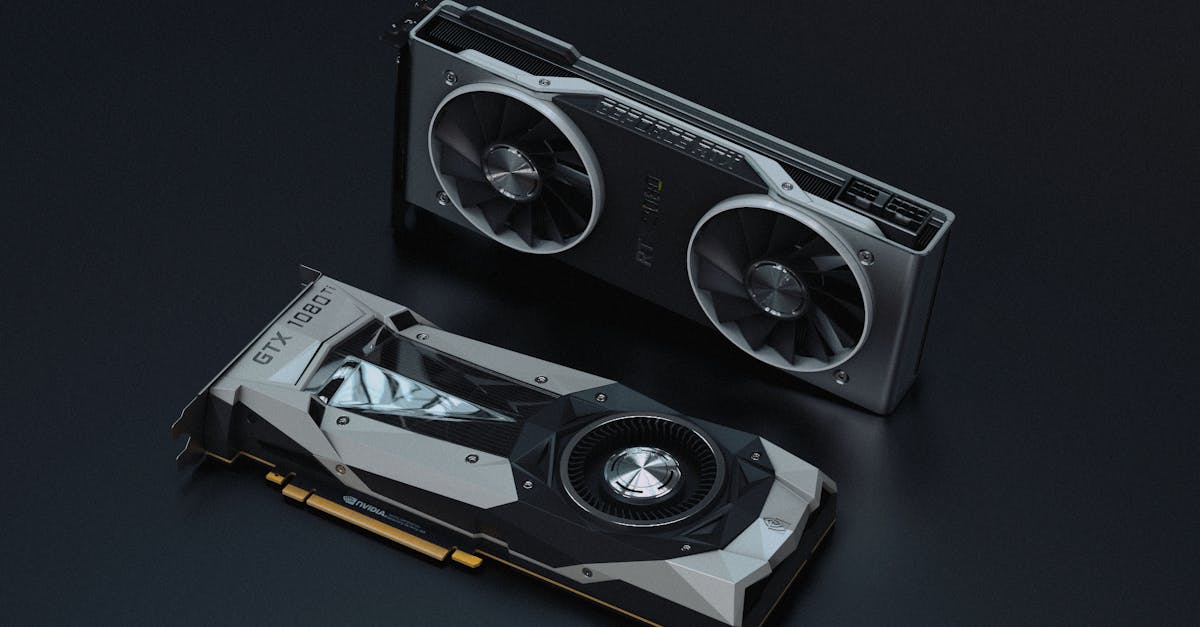
On September 17 Nvidia posted a terse blog entry titled "Native GPU Programming in Rust". In a single paragraph the company announced that the next version of the CUDA toolkit will ship with first-class Rust bindings, a compiler plugin, and a set of libraries that let you write kernels in pure Rust without a C++ shim. The news instantly trended on Hacker News and sparked a flurry of X posts because it touches two hot developer pain points: low-level GPU performance and memory safety.
"If you can write safe, concurrent code on the CPU, you should be able to do the same on the GPU." – Nvidia Engineering Lead
The timing is also interesting. A week earlier, a popular Dev.to article explained how AI agents call APIs from scratch, highlighting the growing need for reliable, high-throughput inference. Nvidia's move can be read as a direct response to that demand: give AI engineers a language that prevents the classic buffer-overflow bugs that have long haunted GPU code.
rustc driver will understand the #[kernel] attribute and generate PTX directly.cuda crate will expose device-side equivalents of Vec, Option, and Result.The announcement also promised first-class support for the upcoming Hopper architecture, meaning developers can start targeting the newest GPUs today.
GPU programming has traditionally been the domain of C and C++. Those languages give you raw control but also expose you to undefined behavior, race conditions, and hard-to-debug memory bugs. Rust's borrow checker enforces at compile time that:
When you translate those guarantees to the massively parallel GPU execution model, you get a reduction in hard-to-track bugs that often cause silent data corruption in scientific simulations or AI training loops.
Rust's modern tooling—cargo, rustfmt, clippy—already streamlines CPU development. Extending that workflow to the GPU means:
nvcc directly.serde, rayon) can be adapted for device-side use, accelerating prototyping.| Feature | CUDA C++ | OpenCL C | Rust GPU (preview) |
|---|---|---|---|
| Memory Safety | Manual checks, undefined behavior possible | Manual checks, similar risks | Compile-time borrow checking |
| Language Ergonomics | Complex build system, separate .cu files | Verbose, older ecosystem | Unified Cargo workflow |
| Ecosystem | Mature, many libraries | Fragmented, less community | Growing, open-source crates |
| Interop with AI frameworks | Strong (TensorRT, PyTorch) | Limited | Planned bindings for %%INLINECODE_12%% and %%INLINECODE_13%% |
| Learning Curve | Steep for newcomers | Steep, low-level | Moderate if familiar with Rust |
The table shows that Rust does not yet have the breadth of libraries that CUDA C++ enjoys, but the safety and ergonomics advantages are compelling enough to justify early adoption for many teams.
Consider a Rust-based microservice that receives a JSON payload, deserializes it with serde_json, and runs a 4-bit quantized transformer on a Jetson device. With native Rust GPU support you can:
Result types to handle kernel launch failures gracefully.The result is a 30-40% latency reduction compared to a C++-based pipeline that marshals data through multiple layers.
Game studios have been experimenting with Rust for engine code, but GPU shaders have remained in GLSL/HLSL. Nvidia's offering lets you write compute shaders in Rust, enabling:
Arc<Mutex<>> equivalents) without unsafe casts.cuda crate to your Cargo.toml:toml [dependencies]
cuda = "0.1"
rust   #[kernel]
   pub unsafe fn add_vectors(a: *const f32, b: *const f32, out: *mut f32, n: usize) {
       let idx = thread_idx_x() as usize;
       if idx < n {
           *out.add(idx) = *a.add(idx) + *b.add(idx);
       }
   }
cargo build --release --features cuda.Even if you are not ready to ship production code, experimenting now will give you a head start before the stable release lands later this year.
Nvidia's decision signals a shift in the GPU ecosystem from "performance at any cost" to "performance with safety". As AI workloads become more ubiquitous and edge devices proliferate, developers cannot afford the hidden bugs that have historically plagued GPU code. Rust's strict compile-time guarantees, combined with Nvidia's hardware expertise, could usher in a new era where high-throughput compute and developer happiness are no longer at odds.
Hot Take: If you are building any latency-sensitive AI service or real-time graphics pipeline, start allocating budget for Rust GPU experiments now. The early adopters will capture the talent pipeline and own the next wave of safe, high-performance compute.
Stay tuned for follow-up posts on benchmarking Rust kernels against CUDA C++ and on integrating Rust-based GPU inference into popular frameworks like TensorFlow and PyTorch.