Programming
Rust
GPU
Nvidia
CUDA
Ask anything about this article
Hi! I've read this article.
What would you like to know?
@farhan
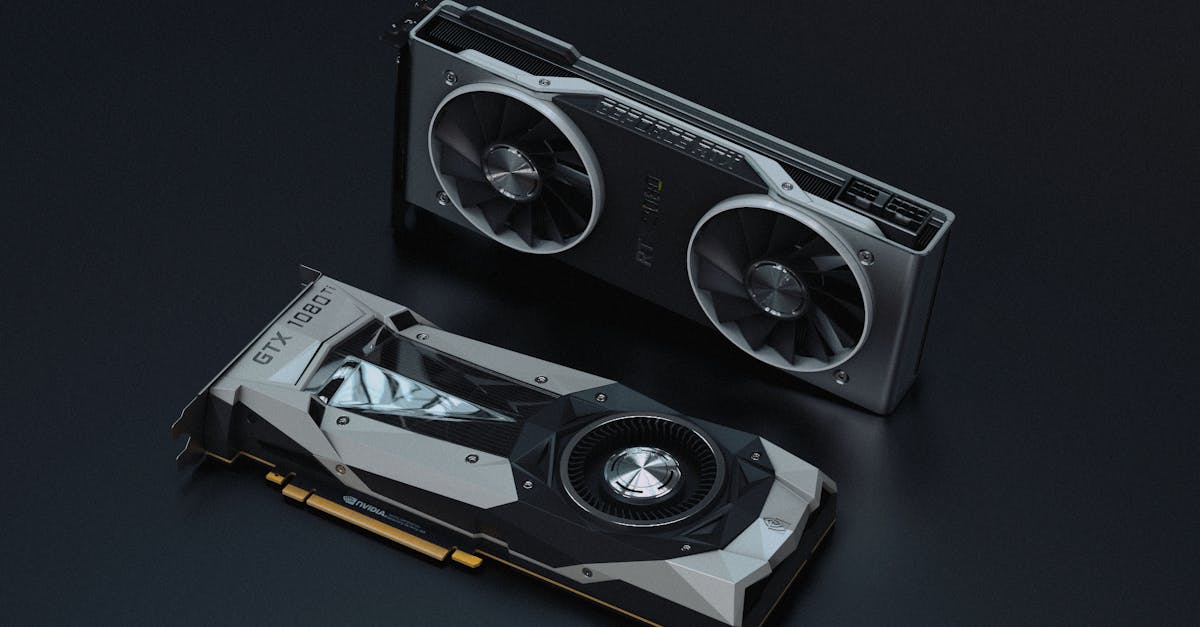
Nvidia's latest announcement – native GPU programming in Rust – is the kind of headline that makes Hacker News threads explode. For years, CUDA has been the de‑facto language for writing high‑performance kernels, and most developers have learned to live with its quirks. Rust, on the other hand, has built a reputation for safety, zero‑cost abstractions, and a growing ecosystem that attracts systems programmers. Marrying the two could be a game‑changer, but the hype needs to be tempered with a realistic look at the trade‑offs, the tooling landscape, and the real‑world impact on AI workloads and systems code.
"Native Rust on Nvidia GPUs is not just a new API – it's a cultural shift toward safer, more maintainable high‑performance code."
The announcement landed on Hacker News alongside other hot topics like a 4B model that generates query plans 81% faster than Postgres and Nvidia's push for Rust in native GPU pipelines. The timing is significant: developers are wrestling with the complexity of AI model serving, the cost of GPU compute, and the rising demand for reliability in production systems. Rust's ownership model promises to catch many bugs at compile time, a promise that resonates when you are debugging a kernel that runs for weeks on a multi‑node GPU cluster.
Nvidia's SDK now includes a Rust compiler front‑end that targets the PTX assembly language directly, bypassing the traditional C++/CUDA bridge. In practice, this means:
nvptx64-nvidia-cuda target, and link them with host code written in Rust as well.cargo becomes the primary build system, handling dependencies, versioning, and cross‑compilation.| Feature | CUDA C++ | Native Rust GPU |
|---|---|---|
| Language safety | Manual checks, undefined behavior possible | Compile‑time borrow checking, memory safety |
| Ecosystem maturity | Over a decade of libraries, profilers, and docs | Early stage, limited crates, growing community |
| Tooling | Nsight, Visual Profiler, extensive IDE support | %%INLINECODE_2%% integration, nascent debugger support |
| Performance | Near‑hardware, highly tuned | Comparable in benchmarks, still optimizing |
| Learning curve | Steep for newcomers, but many resources | Rust learning curve plus GPU concepts |
The table makes it clear that Rust is not yet a drop‑in replacement for CUDA C++. However, the safety benefits could translate into faster development cycles, especially for teams that already use Rust for backend services.
Consider the headline about a 4B model that delivers query plans 81% faster than Postgres. Such performance gains often come from custom kernel optimizations. With native Rust, data‑science teams could:
While early benchmarks from Nvidia show parity with CUDA for standard kernels (matrix multiply, convolution), the true advantage will appear in complex pipelines where Rust's type system can enforce invariants across CPU‑GPU boundaries.
bashcargo new my_gpu_project
cd my_gpu_project
# Add the nvptx target
rustup target add nvptx64-nvidia-cuda
# Write a kernel in src/kernel.rs
# Build for the GPU
cargo build --target nvptx64-nvidia-cuda
The above snippet (under 10 lines) demonstrates how familiar the workflow feels to any Rust developer. No Makefiles, no separate CUDA compilation steps.
The current toolchain still relies on Nvidia's existing profilers, but community‑driven projects like rust-gpu-tools are emerging to provide source‑level debugging. Expect a few months of rough edges before the experience matches Nsight for CUDA.
Nvidia is not the only player pushing for safer GPU programming. Apple’s Metal now supports Swift, and the open‑source wgpu project brings Rust to WebGPU. The underlying theme is clear: the industry is tired of fragile, memory‑unsafe kernel code that costs weeks of debugging. By integrating Rust at the native level, Nvidia signals that safety is becoming a first‑class requirement for performance‑critical workloads.
cargo workflow. The learning curve is manageable for anyone with basic Rust knowledge.rust-gpu, cust (CUDA bindings), and wgpu for cross‑platform insights.Nvidia's native Rust GPU support is more than a novelty; it's a strategic move that could reshape how we think about high‑performance, safety‑critical code. While the ecosystem is still nascent, the potential benefits – fewer bugs, faster iteration, and a unified language stack from server to GPU – are compelling. Developers who invest early may gain a competitive edge as the tooling matures and the community coalesces around safer GPU programming.
"The real win is not just speed, but the confidence that your kernel won't corrupt memory at runtime."
Stay tuned, experiment, and be ready to rewrite your GPU pipelines in Rust.