Introduction
The AI community woke up this morning to two very different headlines that, when read together, sketch a paradoxical future for developers. On one hand, Hacker News is buzzing about a breakthrough: Qwen 3.8 Flash Next (125B) can be run on a single RTX 4090 at 100 tera‑operations per second. On the other, Google News reports that Gemini's newest app is limiting which models free and AI Plus users can access, while tucking a new "Deep Think" tier behind a paywall.
Both stories are about the same thing – the democratization of massive language models – but they highlight opposite forces: raw compute power falling into the hands of hobbyists, and platform owners pulling the rug back with licensing and tiered access. This tension is already shaping developer conversations on Hacker News, Twitter/X, and Discord, and it will define the next wave of AI tooling.
Hot take: The real battle isn’t about who can train the biggest model, it’s about who can use the biggest model without surrendering control to a closed platform.
Why Qwen 3.8 Flash Is a Watershed Moment
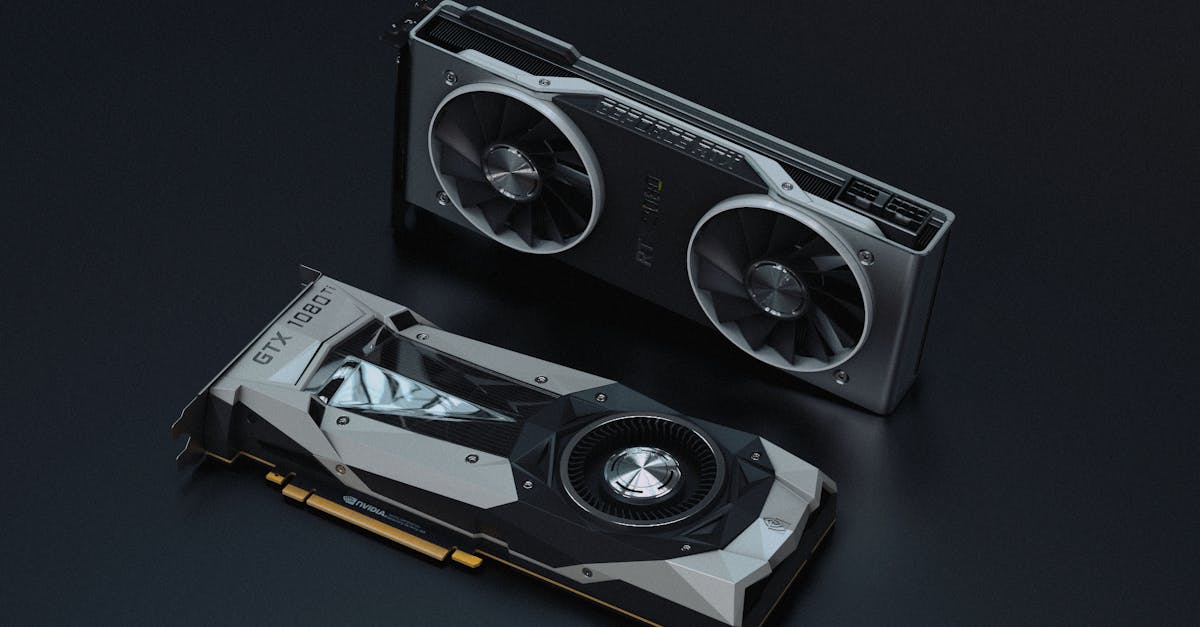
Qwen 3.8 Flash Next, a 125‑billion‑parameter model released by Alibaba’s research arm, was built for efficiency. Its architecture leans heavily on sparsity and quantization, allowing it to squeeze performance that previously required multi‑node GPU clusters onto a single RTX 4090. The headline claim – 100 trillion operations per second – translates to roughly 30 tokens per millisecond for inference, a speed that rivals many hosted APIs.
Key takeaways for developers:
Cost reduction: Running a 125B model locally eliminates API fees that can exceed $0.02 per 1k tokens for premium services.Data privacy: Sensitive prompts never leave the machine, a crucial advantage for regulated industries.Experimentation speed: No network latency means rapid iteration on prompt engineering and tool integration.These benefits are especially compelling for indie developers, researchers, and small startups that previously had to settle for 7‑30B models because of hardware constraints.
The reported 100 tera‑operations per second (Tops) is a theoretical peak measured on a synthetic benchmark. Real‑world inference will be lower due to memory bandwidth, kernel launch overhead, and the need to keep the GPU cool under sustained load. Still, even a 50‑60% efficiency would be unprecedented for a model of this size.
| Metric | Qwen 3.8 Flash (RTX 4090) | Gemini Pro (cloud) | Llama 2 70B (multi‑GPU) |
|---|
| Peak Tops | 100T | 80T (estimated) | 120T (across 8 A100) |
| Tokens per second (inference) | ~30k | ~25k | ~28k |
| Cost per million tokens | $0.005 (electricity) | $0.12 (API) | $0.30 (cloud GPU) |
| Data residency | Local | Cloud | Cloud |
Even if the numbers shift by a few percent, the economic calculus changes dramatically. Developers can now run a model that was once the exclusive domain of cloud providers, for a fraction of the cost.
While the hardware story is about openness, the Gemini announcement is about restriction. Google’s Gemini app is rolling out three tiers:
Free tier – limited to a handful of older models.AI Plus – unlocks a medium‑sized model but still blocks the newest releases.AI Pro – introduces a "Deep Think" mode that promises better reasoning but is only available to paying subscribers.The move is framed as a way to manage compute costs and maintain quality, but the community reaction is mixed. Many developers see it as a step back from the open‑source momentum that has defined AI over the past two years.
Key insight: When a platform controls the most capable models, it can dictate pricing, data policies, and even the direction of research by throttling access.
The Developer Dilemma: Power vs. Access
The two headlines force developers to make a strategic choice:
Go local with Qwen 3.8 Flash – invest in a high‑end GPU, manage the engineering overhead of running a massive model, but retain full control.Stay on a managed platform like Gemini – avoid hardware maintenance, get automatic updates, but surrender usage rights and potentially pay premium fees.Pros of Going Local
Full customizability: You can fine‑tune, prune, or experiment with new prompting techniques without waiting for a provider.Predictable costs: Electricity and hardware depreciation are easier to forecast than variable API pricing.Community ownership: Open‑source ecosystems thrive when large models are freely available.Cons of Going Local
Operational burden: You must handle scaling, monitoring, and security patches.Upfront capital: A RTX 4090 costs $1,600+ plus a capable CPU, RAM, and cooling.Limited support: No SLA, no dedicated support unless you contract a third‑party.Zero ops: The provider handles scaling, uptime, and model updates.Integrated tools: Many platforms bundle analytics, logging, and UI components.Rapid prototyping: Start building apps without hardware procurement.Cost creep: Per‑token fees add up quickly for high‑traffic apps.Data lock‑in: Sensitive data may be stored on the provider’s servers.Feature gating: New capabilities are often reserved for higher‑priced tiers.What This Means for the Next 12 Months
Hybrid architectures will dominate. Expect startups to adopt a local inference layer for core workloads while falling back to cloud APIs for burst traffic or specialized features.GPU price volatility will influence adoption. If the RTX 4090 remains scarce or expensive, the barrier to entry stays high, keeping cloud services relevant.Open‑source model releases will accelerate. Communities will likely fork Qwen, apply further quantization, and push the performance envelope.Regulatory pressure may favor local models. Data‑privacy laws (e.g., GDPR, CCPA) could push enterprises toward on‑prem inference to avoid cross‑border data flows.Platform providers will double‑down on tiered access. Gemini’s move is a signal that other big players (Microsoft, Amazon) will follow with “premium reasoning” add‑ons.A Practical Playbook for Developers
Audit your workload. If your token volume is under 10M per month, a local RTX 4090 could be cheaper than any API.Prototype on the cloud, then migrate. Use a managed service to validate product‑market fit, then switch to a self‑hosted model to cut costs.Stay model‑agnostic. Abstract your inference layer so you can swap Qwen for Gemini or any future model without major code changes.Monitor pricing trends. Cloud providers frequently adjust token pricing; set up alerts to avoid surprise bills.Contribute back. If you fine‑tune Qwen, share your weights or scripts; the open‑source ecosystem thrives on reciprocity.TL;DR
Qwen 3.8 Flash proves massive models can run on a single RTX 4090, slashing inference costs and restoring data privacy.Gemini’s tiered model gating reminds us that platform control can quickly turn raw compute power into a paid service.Developers must decide between operational independence (local GPU) and convenience (cloud API), likely adopting hybrid solutions in the near term.The battle for AI democratization is now being fought on two fronts: hardware accessibility and platform openness. The winners will be those who can blend the raw power of consumer‑grade GPUs with the flexibility of open‑source ecosystems, while keeping an eye on the cost and data‑privacy implications of staying locked into a proprietary service.