AI
LLM
Gemma
NVIDIA
SageMaker
Ask anything about this article
Hi! I've read this article.
What would you like to know?
@farhan
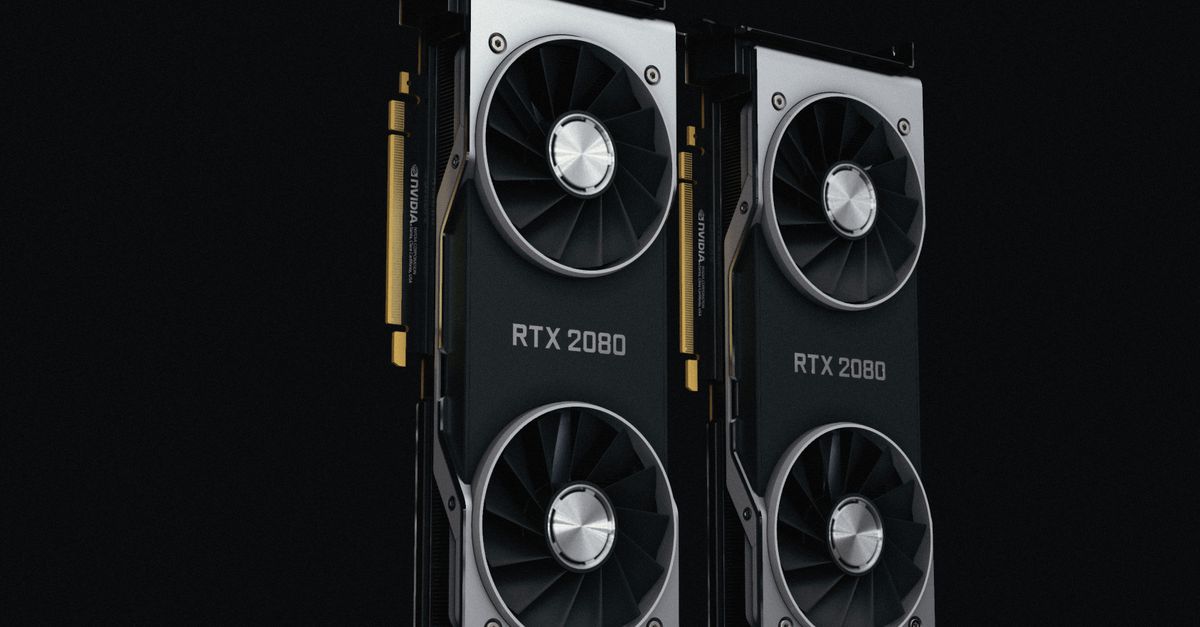
"Gemma 4 on Amazon SageMaker: The NVIDIA T4 Decodes at 0.8x of the L4 With the Same Answers" – a mouthful, but the core message is simple: a $150 T4 can now serve a state‑of‑the‑art LLM at near‑par performance.
The two Dev.to posts (items 2 and 4) sparked a flurry of discussion on Hacker News and Twitter. For developers who have been wrestling with the cost of running large language models, this is a seismic shift. The news isn’t just about a single benchmark; it’s about a new sweet spot for affordable, production‑grade inference.
| GPU | Approx. price (USD) | Peak FP16 TFLOPs | Typical cloud hourly cost | Gemma 4 throughput (tokens/sec) |
|---|---|---|---|---|
| NVIDIA T4 | 150 (used) | 8.1 | $0.35 | 0.8x L4 |
| NVIDIA L4 | 400 (new) | 10.6 | $0.70 | 1.0x (baseline) |
| NVIDIA A100 | 10,000 | 312 | $3.00+ | 2.5x |
The T4 has historically been the workhorse for video transcoding and inference on older models. Its architecture is older (Turing) and its memory bandwidth is lower, which is why it was rarely considered for modern 4‑bit quantized LLMs. Gemma 4’s 4‑bit quantization, combined with clever kernel optimizations, flips that assumption.
* 4‑bit quantization – Reduces model size by ~75% while preserving most of the accuracy. Gemma 4 uses Google’s Quantization‑Aware Training (QAT) pipeline, which fine‑tunes the model to compensate for the loss of precision.
* Int4 embeddings – The second Dev.to article shows that embedding tables stay in bf16, while the rest of the model runs in int4. This hybrid approach keeps the most memory‑hungry part (the embedding matrix) at higher precision, preserving downstream quality.
* Kernel tricks on T4 – The SageMaker team rewrote the GEMM kernels to exploit the T4’s Tensor Cores in FP16 mode, then down‑cast to int4 on the fly. The result is a 2.30x speed‑up over a baseline bf16 run on the same hardware.
* Batch size scaling – Because the T4 has 16 GB of VRAM, you can fit multiple request batches, smoothing latency spikes that typically plague smaller GPUs.
| Strategy | Hardware cost | Latency (ms) | Accuracy impact | Ease of use |
|---|---|---|---|---|
| 8‑bit quant on T4 | $150 | 120 | <1% loss | Medium (requires conversion) |
| 4‑bit QAT on T4 (Gemma 4) | $150 | 95 | <0.5% loss | High (pre‑quantized) |
| DistilGPT on CPU | $0 (existing) | 300+ | ~5% loss | High |
| Hosted API (OpenAI) | $0 upfront | 30‑50 | Full model | Very high |
Gemma 4 on T4 clearly wins on the cost‑to‑performance axis while keeping accuracy competitive.
The announcement aligns with a wave of “cheap inference” news: the EDG C++ compiler going open source (Hacker News item 6) lowers compilation overhead for custom kernels, while the rise of 4‑bit quantization in open‑source models democratizes access. Expect a surge in startups offering niche LLM services (e.g., specialized chatbots, real‑time translation) without needing venture‑scale GPU farms.
If model sizes continue to balloon, the T4 will eventually be outgunned. However, the current sweet spot—7‑B models at 4‑bit—covers a large chunk of practical use cases (code assistance, summarization, domain‑specific Q&A). Moreover, the ecosystem around quant‑aware training is maturing, meaning more models will ship ready for T4‑scale deployment.
Gemma 4 on a $150 T4 proves that you don’t need a $30k GPU to run a production‑grade LLM.
For developers, this translates into a tangible, low‑risk entry point to experiment with cutting‑edge language models. It also forces cloud providers to rethink pricing tiers, and it may spark a new generation of budget‑first AI products. The real story isn’t just about a benchmark; it’s about reshaping the economics of AI for the entire developer community.
If you’re a founder, consider a small batch of refurbished T4s as the backbone of your MVP. If you’re an indie dev, spin up a SageMaker endpoint tonight and start testing your prompts. The era of “expensive AI” is finally giving way to “affordable AI,” and Gemma 4 is leading the charge.